Confirm and inspect
The technician checks the thermostat, filter, indoor unit and outdoor unit, and listens to how the system starts.
Warm air, a unit that will not start, ice on the lines or a new noise? Learn what usually causes it, what you can safely check, and get connected with an independent local HVAC provider.
Free referral service. Your call is connected to an independent local HVAC provider, who quotes and performs the work.
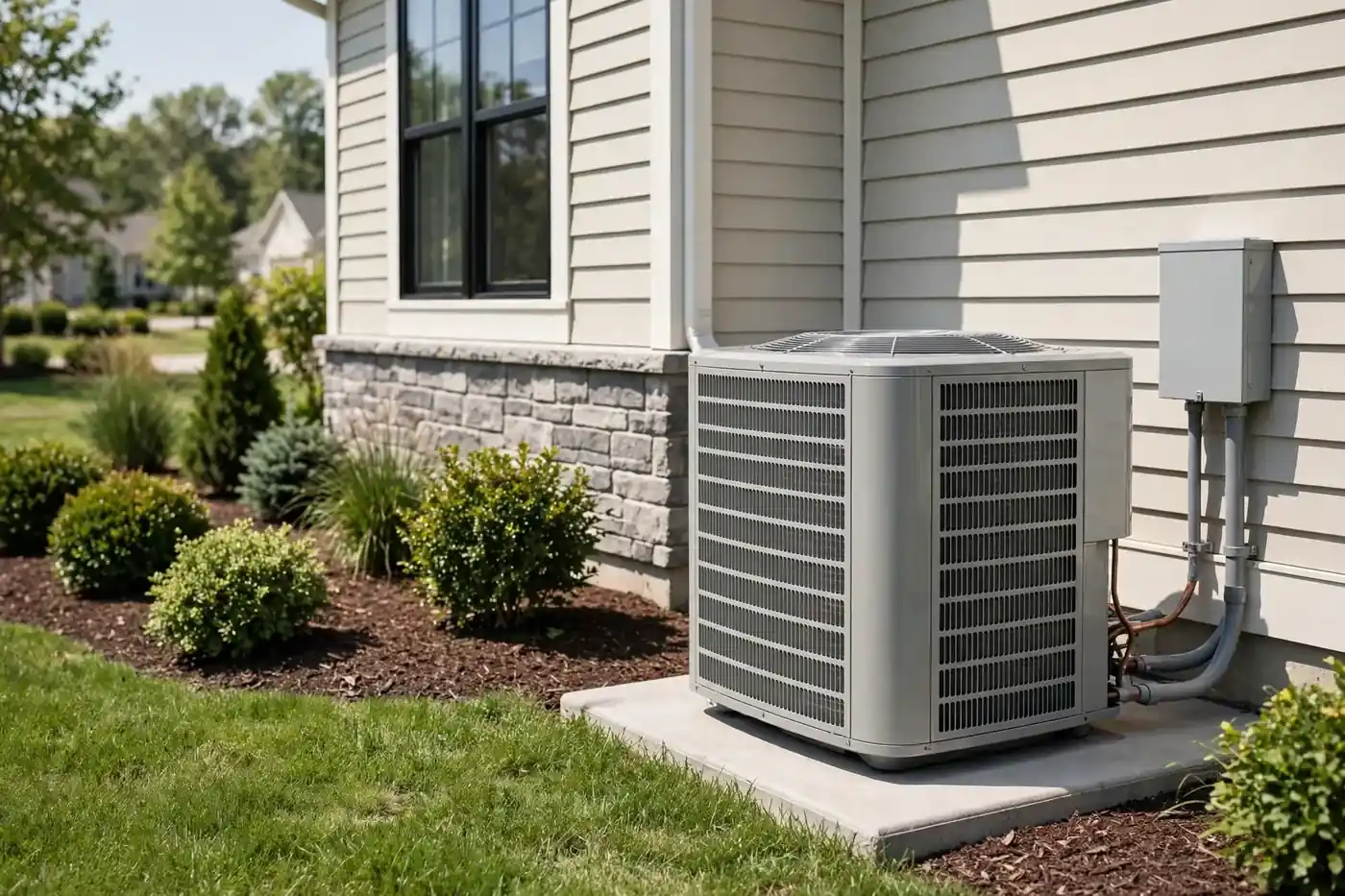
Most air conditioner failures come from a short list: restricted airflow, a worn electrical part such as a capacitor or contactor, a refrigerant leak, a clogged condensate drain or a thermostat problem. A technician tests each one rather than guessing, and many of these repairs are finished in a single visit.
Air conditioners in western Washington spend much of the year switched off, then are asked to run hard for a few weeks of summer heat. That pattern is rough on parts. Capacitors weaken over idle months, dust collects on coils, and small refrigerant leaks only show up when the system finally runs for hours at a stretch. That is why so many repair calls arrive during the first warm week of the year.
This page walks through the common symptoms, what you can safely check yourself, what a repair visit looks like, and when it is time to stop repairing. If your system is older and failing repeatedly, the AC replacement guide is worth reading alongside this one.
Pro tipWrite down when the problem started, what you heard or smelled, and whether the outdoor fan is spinning. Those three details often point a technician straight to the fault.
Match what you are seeing to the most likely causes below. These are starting points for the conversation with a technician, not a diagnosis.
| Symptom | Common causes | How urgent |
|---|---|---|
| Blowing warm air | Outdoor unit not running, failed capacitor, low refrigerant, dirty outdoor coil | Book soon |
| Will not turn on | Thermostat setting or batteries, tripped breaker, failed contactor, full drain pan switch | Check basics first |
| Ice on lines or coil | Dirty filter, weak blower, low refrigerant | Turn off, let it thaw |
| Buzzing, outdoor fan not spinning | Weak capacitor or seized fan motor | Turn off and book |
| Short cycling | Dirty filter, thermostat placement, low charge, oversized unit | Book soon |
| Water near the indoor unit | Clogged condensate drain, cracked drain pan, failed condensate pump | Book soon |
| Burning or electrical smell | Overheating motor, failing wiring or electrical component | Turn off at breaker now |
Some of these overlap. A frozen coil, for example, often causes warm air once the ice blocks airflow, and a clogged drain can shut the whole system down if a safety float switch is installed. That is why the technician starts with measurements rather than replacing the most likely part. If the system keeps turning on and off, the short cycling guide goes deeper.
A few quick checks solve a surprising number of no-cooling calls, and the rest give the technician useful information.
Do notDo not open electrical panels on the unit, push contactors in by hand, bypass a float switch or add refrigerant yourself. Refrigerant handling requires EPA certification, and the capacitor can hold a dangerous charge even with the power off.
A good repair visit follows a clear order: confirm the complaint, test, explain, then fix with your approval.
The technician checks the thermostat, filter, indoor unit and outdoor unit, and listens to how the system starts.
Capacitors, contactors, wiring and motor draw are measured with a meter, not judged by eye.
Pressures, temperatures and airflow are compared with what the equipment should be doing.
You hear what failed and why, with the price of the repair before any work begins.
Common parts such as capacitors, contactors and fuses are often carried on the truck. Fan motors, control boards and brand-specific parts may need ordering, so ask how long that takes and how to stay comfortable in the meantime. A portable fan in the coolest room and closed blinds on sunny windows help more than most people expect.
An air conditioner does not use up refrigerant. If it is low, there is a leak, and topping it up without finding the leak only buys time.
A technician who finds a low charge should talk to you about leak detection: where the leak might be, whether it can be repaired, and what a repair would involve. Leaks in the indoor coil are common on older systems and are often the point where replacement becomes the better value.
Older systems that use R-22 face an extra problem. R-22 is no longer produced in the United States, so recharging relies on reclaimed supply and can be expensive. If your system uses R-22 and has a leak, ask for a replacement quote alongside the repair so you can compare.
Repair makes sense for a single failed part on a system that otherwise runs well. Replacement deserves a look when several warning signs line up.
If you are in that position, a heat pump is worth pricing too, since it replaces both cooling and heating. For homes that only struggle in one or two rooms, ductless mini-splits can solve the problem without touching the main system. Many Lynnwood homeowners compare options from the AC replacement in Lynnwood overview first.
Most preventable failures trace back to airflow and neglected parts, so a little routine care goes a long way.
Change or clean the filter on the schedule the manufacturer recommends, and more often if you have pets or nearby construction. Keep the outdoor unit clear of plants and debris. Book a spring check before the first warm spell; the AC tune-up guide lists what that visit should include. A technician can often spot a weak capacitor or a partly blocked drain months before it causes a breakdown.
Common causes are a dirty filter, a frozen coil, a failed outdoor fan or capacitor, or low refrigerant. Check the filter and thermostat first, then turn the system off if you see ice and call for service.
A humming outdoor unit that will not start often has a weak capacitor or a stuck contactor. Turn the system off to protect the compressor and have it tested.
No. Running a frozen system can damage the compressor. Turn it off, let it thaw completely, replace a dirty filter, and have the cause found before running it again.
Ask what failed, how it was tested and what the part and labor cost. A written quote and a clear explanation are good signs. You can always get a second opinion.
For a single small part, often yes. For a failed compressor, a coil leak or an R-22 system that needs refrigerant, compare the repair with a replacement quote before deciding.
Availability depends on the independent provider and the time of year. Ask when you call, and switch the system off if it smells like burning.
Calling from Bothell? See AC and HVAC services in Bothell.
Switch it off if it smells like burning, then call to reach an independent provider serving Lynnwood.
(425) 592-3234Free referral service. Your call is connected to an independent local HVAC provider, who quotes and performs the work.