Heating and cooling load
Capacity is calculated for both seasons. In this climate the heating load usually decides the size.
One outdoor unit for summer cooling and winter heat, sized for the mild, damp Puget Sound climate. Learn the options and get connected with an independent local HVAC provider.
Free referral service. Your call is connected to an independent local HVAC provider, who quotes and performs the work.
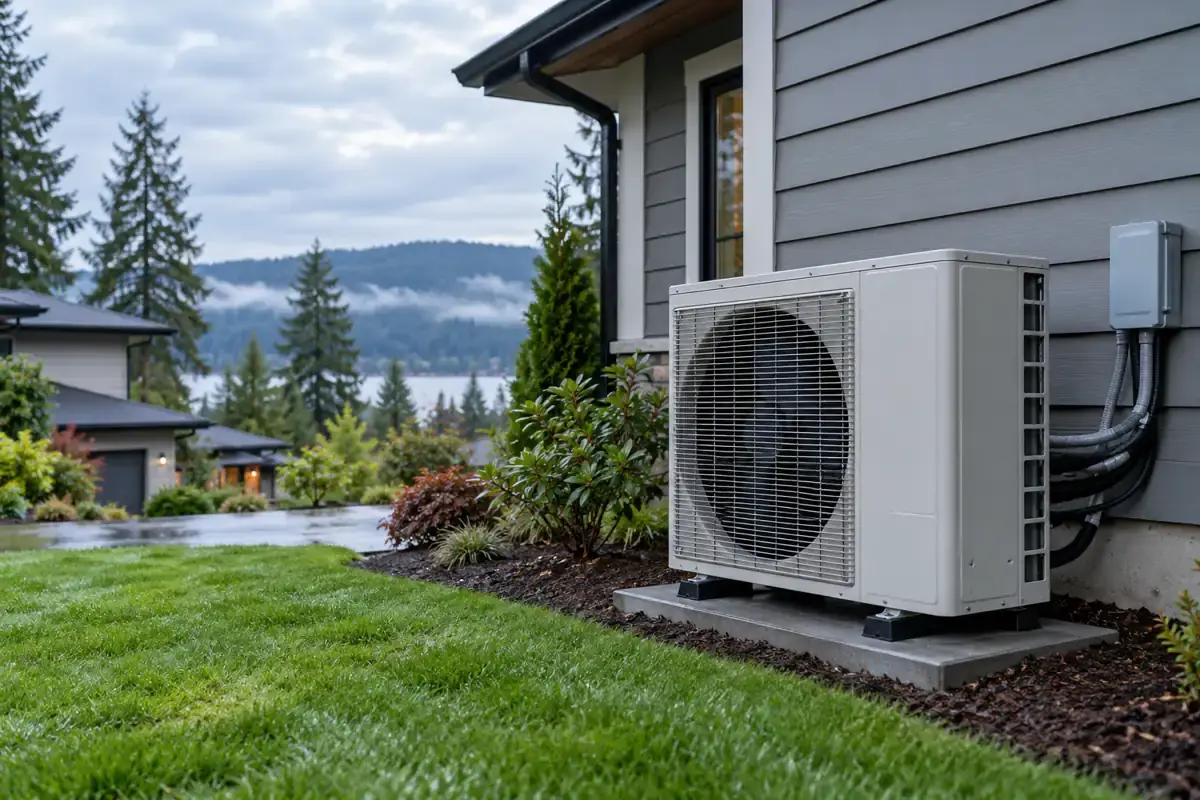
A heat pump is an air conditioner that can also run in reverse. In summer it moves heat out of your house; in winter it pulls heat from the outdoor air and brings it inside. One outdoor unit handles both jobs, which is why heat pumps are a common upgrade for homes replacing an old AC, an aging furnace or electric baseboard heat.
The Puget Sound climate suits them well. Winters here are usually cool and damp rather than bitterly cold, which is the range where heat pumps work efficiently, and summers have brought enough heat in recent years that many households want cooling for the first time. A heat pump covers both without adding a second system.
This page explains how heat pumps work, the main types, what installation involves and the questions worth asking. If you only need cooling and your furnace is fairly new, the central AC replacement guide may be the simpler path.
It moves heat instead of making it. Refrigerant absorbs heat in one coil and releases it in the other, and a reversing valve swaps which coil does which.
In cooling mode, the indoor coil absorbs heat from your house and the outdoor unit releases it outside, exactly like a central air conditioner. In heating mode, the flow reverses: the outdoor coil absorbs heat from the outdoor air, even when it feels cold, and the indoor coil releases it into your ducts or room. Because the system is moving heat rather than burning fuel or running a resistance element, it can deliver more heat energy than the electricity it uses.
On cold, damp mornings the outdoor coil can collect frost. The system handles that with a short defrost cycle, during which you may see steam rising from the outdoor unit. That is normal and not a sign of a problem.
If your home has ducts in reasonable shape, a ducted heat pump is usually the natural fit. Without ducts, a ductless system is often simpler.
| Type | Best for | Things to ask |
|---|---|---|
| Ducted, all-electric | Homes with ducts replacing both AC and an older furnace | Backup heat for the coldest nights, panel capacity |
| Ducted, dual-fuel | Homes keeping a gas furnace as backup heat | At what outdoor temperature the furnace takes over |
| Ductless mini-split | Homes without ducts, baseboard heat, additions | Number and placement of indoor heads, line set routes |
| Ducted plus ductless | Main floor on ducts, hot upstairs or addition without | How the two systems are controlled together |
For room-by-room systems in more detail, see the ductless mini-split page.
Most homes can use one. The real questions are about your ducts, your electrical service and how you heat today.
Where it may need more thought: very leaky older homes that would benefit from insulation and air sealing first, and homes with undersized ducts that would make a heat pump noisy or weak. A load calculation and a duct check answer both.
The steps are similar to an AC replacement, with extra attention to heating capacity, backup heat and controls.
Capacity is calculated for both seasons. In this climate the heating load usually decides the size.
The provider checks the panel, the circuit and any backup heat strips the system will need.
The outdoor unit is set on a pad or bracket, the indoor coil or air handler is installed and the lines are connected.
A compatible thermostat is set up for heat pump operation, then both modes are tested.
Ask how the provider sets the thermostat for backup heat. A poorly configured control can bring on electric strip heat too often, which raises bills and hides how well the heat pump itself is performing.
Modern cold-climate models are designed to keep heating well below freezing, and Lynnwood winters rarely stay that cold for long.
Every heat pump loses some capacity as the outdoor temperature drops, so the system should be sized for your home on a cold night, not an average one. Most installs include some form of backup: electric heat strips in the air handler, or your existing gas furnace in a dual-fuel setup. Ask the provider what the backup is, when it will turn on, and how the heat pump is rated at low temperatures. If an existing system feels cold in winter, the heat pump blowing cold air guide explains what is normal.
Pro tipAsk for the heating capacity at a cold outdoor temperature, not only the nominal size. Two units with the same tonnage can perform very differently in winter.
Each provider sets its own pricing, so we do not publish prices. These are the factors that move a written estimate.
| Factor | Why it matters |
|---|---|
| System type | Ducted, ductless and dual-fuel systems involve different equipment and labor. |
| Capacity | Set by the heating and cooling load of your home. |
| Cold-climate rating | Models built for strong low-temperature heating often cost more upfront. |
| Electrical work | Panel capacity, a new circuit or backup heat strips. |
| Ducts | Sealing or resizing ducts so the system is quiet and effective. |
| Rebates | Utility programs sometimes help with qualifying heat pumps; confirm current terms with the program. |
Snohomish County PUD serves most of the Lynnwood area and has offered heat pump programs in the past. Program details change, so check current terms directly before you plan around them. For the bigger picture, homeowners often start with the Lynnwood AC replacement help page.
Check that each quote covers the same capacity, the same type of system and the same backup heat plan before comparing price.
It can. An all-electric heat pump with backup heat strips replaces both the AC and the furnace. In a dual-fuel setup, the heat pump handles most of the heating and the gas furnace takes over on the coldest days.
Not usually. Modern variable-speed outdoor units are often quieter than older air conditioners. You may hear a brief whoosh during a winter defrost cycle, which is normal.
That is the defrost cycle melting frost off the outdoor coil. It lasts a few minutes and is a normal part of heating in damp weather.
Often, if the ducts are sized and sealed reasonably well. The provider should check airflow, because undersized ducts can make a heat pump noisy and less effective.
Yes, and slightly more than an AC because they run all year. A yearly check, clean filters and a clear outdoor unit keep efficiency up.
Sometimes, through utility or state programs. Terms and eligibility change, so confirm current details with the program before buying.
Calling from Bothell? See AC and HVAC services in Bothell.
Call to talk through heat pump options with an independent provider serving Lynnwood.
(425) 592-3234Free referral service. Your call is connected to an independent local HVAC provider, who quotes and performs the work.