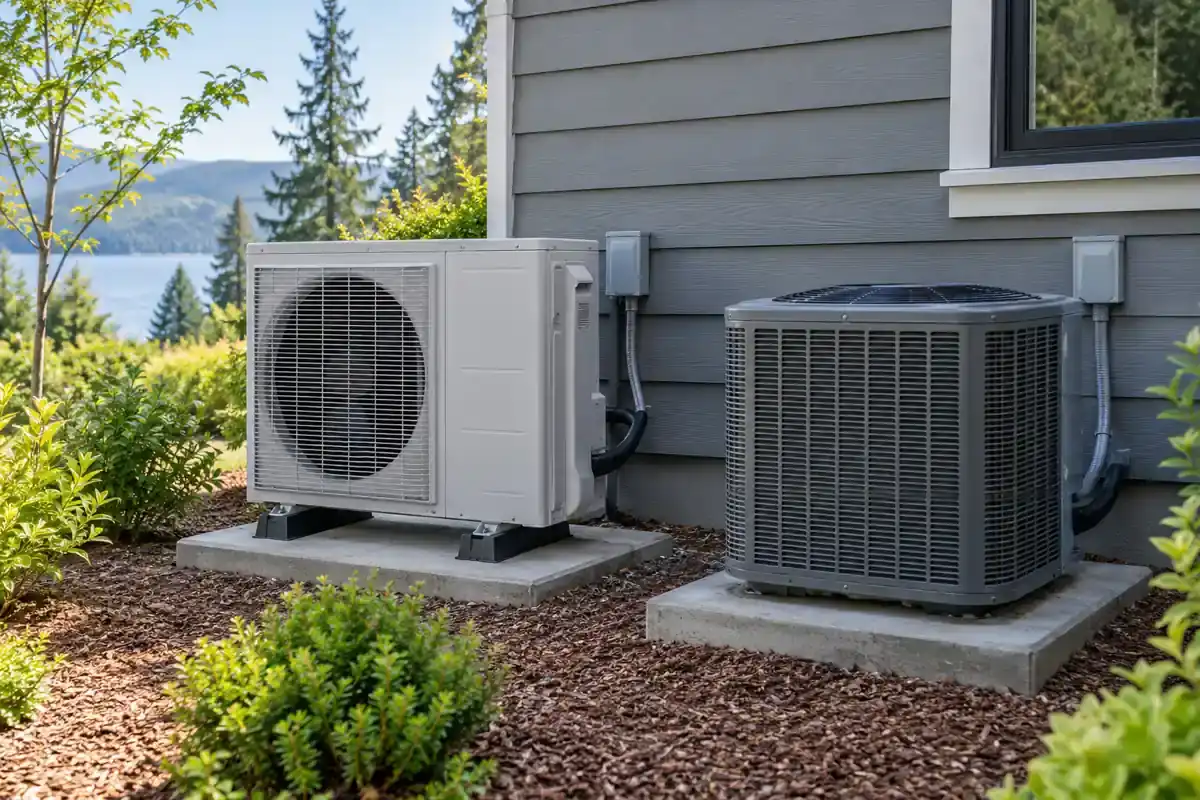
For many Lynnwood homes, a heat pump is the better long-term choice, because it cools in summer and heats efficiently through our mild, damp winters. Central AC still makes sense when you have a newer gas furnace you want to keep, or when cooling is all you need.
Both systems cool your home the same way. The difference is what happens in winter, and that is where the Puget Sound climate tilts the decision. Here is how to think it through.
How do a heat pump and central AC differ?
A central air conditioner only cools and is paired with a furnace for heat. A heat pump does both, by reversing the flow of refrigerant in winter.
| Question | Central AC | Heat pump |
|---|---|---|
| Cooling | Yes | Yes, the same way |
| Heating | No; relies on a furnace or other heat | Yes, by moving heat from outdoor air |
| Outdoor unit runs | Summer only | All year |
| Works with gas furnace | Yes, standard pairing | Yes, as a dual-fuel system |
| Typical fit | Newer furnace, cooling-only upgrade | Replacing AC and furnace, or electric heat |
Why does the Lynnwood climate favor heat pumps?
Heat pumps are most efficient in cool, mild weather, and that describes most Lynnwood winter days. Long stretches of deep cold are rare here, so a well-sized heat pump can handle most of the heating season on its own, with backup heat for the occasional cold snap.
At the same time, summers have brought enough heat in recent years that many households want cooling. A heat pump delivers both from one outdoor unit, which is why it comes up so often when older homes add air conditioning for the first time.
Pro tipAsk for the heat pump's heating capacity at a cold outdoor temperature, not only its nominal size. That number tells you how it will perform on the coldest nights.
When does central AC still make more sense?
- Your gas furnace is fairly new and you want to keep it for heating
- You only want cooling and are happy with your current heat
- Your electrical panel has limited capacity and an upgrade is not practical right now
- You want the simplest swap of an existing AC on a sound system
Even then, it is worth asking about a dual-fuel setup: a heat pump in place of the AC, with your furnace taking over only on the coldest days. It cools just like an AC in summer and can cut furnace use in spring and fall.
How do running costs compare?
In cooling mode, a heat pump and a central AC of similar efficiency cost about the same to run. The difference is heating. Compared with electric baseboards or resistance heat, a heat pump typically uses much less electricity for the same warmth. Compared with gas, the answer depends on local energy prices and the efficiency of both systems, so ask the provider to compare them for your home.
Upfront, a heat pump usually costs more than an AC alone but less than replacing both an AC and a furnace. Utility rebates are sometimes available for qualifying heat pumps; confirm current terms with your utility.
What about homes without ducts?
Then the comparison changes. Central AC needs ducts, so for homes heated by baseboards or a boiler, a ductless heat pump is usually the practical answer. The ductless mini-split guide explains how zones and indoor heads work.
What is the bottom line?
If you are replacing an aging AC and furnace together, or heating with electric resistance, price a heat pump first. If you have a newer furnace and just need cooling, a matched central AC or a dual-fuel heat pump are both reasonable. Either way, insist on a load calculation and a written estimate. For more detail, read the heat pump installation guide or the main AC replacement guide.
Frequently asked questions
Can a heat pump really heat a Lynnwood home all winter?
A correctly sized modern heat pump can handle most Lynnwood winter weather, with backup heat for the coldest days.
Is a heat pump louder than an AC?
Usually not. Modern variable-speed units are often quieter. You may hear a brief defrost cycle in damp winter weather.
Can I keep my gas furnace?
Yes. A dual-fuel system uses the heat pump most of the time and the furnace on the coldest days.
About this articleGeneral guidance from Lynnwood Air Comfort, a free referral service. It is not a substitute for an on-site inspection by a qualified technician.