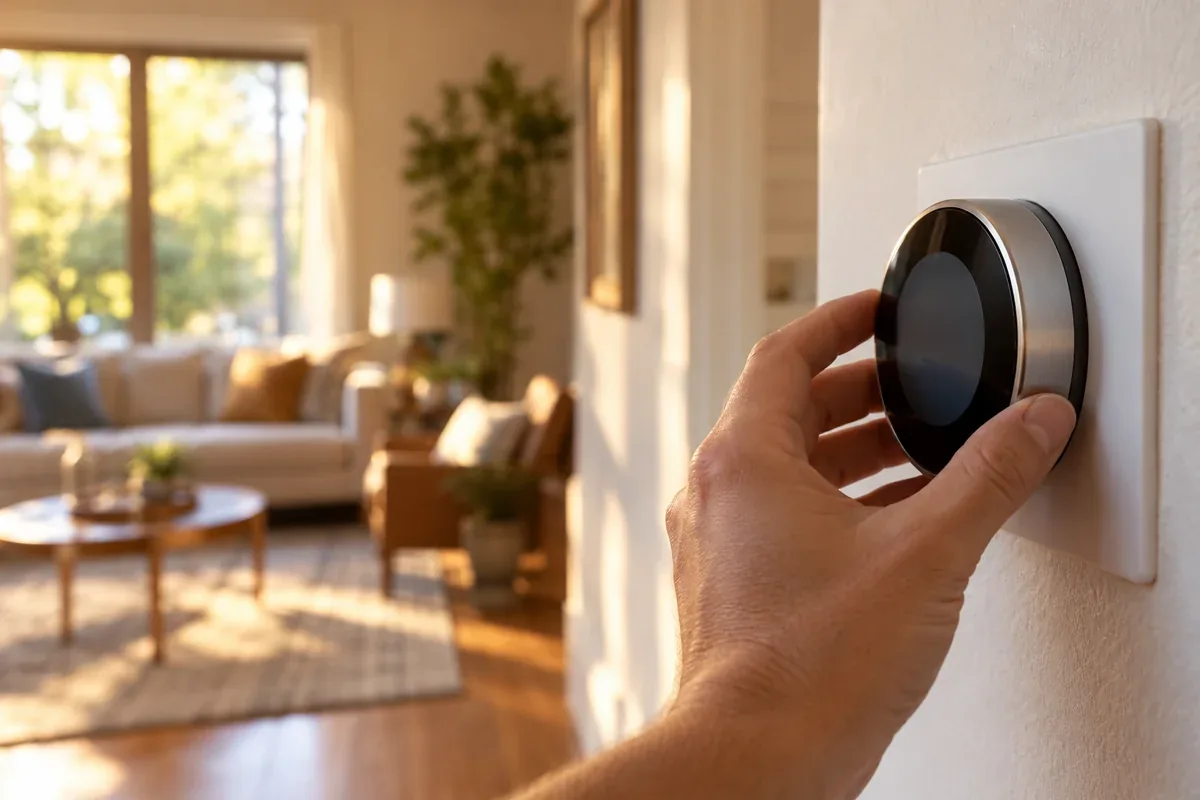
Short cycling means your air conditioner turns on and off every few minutes instead of running in steady cycles. The most common causes are a dirty filter, a frozen coil, low refrigerant, a poorly placed thermostat or a system that is too large for the house. It wastes energy, leaves rooms clammy and wears parts out early, so it is worth fixing promptly.
A healthy system runs long enough to cool the house and pull out humidity, then rests. When cycles become very short and frequent, something is interrupting it. Here is how to narrow down what.
What causes an AC to short cycle?
| Cause | What is happening | Who fixes it |
|---|---|---|
| Dirty filter | Restricted airflow makes the coil too cold and trips safety controls. | Homeowner |
| Thermostat placement | A thermostat near a supply vent, window or heat source reads the wrong temperature. | Provider |
| Frozen evaporator coil | Ice blocks airflow; the system cycles on safety limits. | Turn off; provider finds the cause |
| Low refrigerant | A leak lowers pressure, and pressure switches shut the compressor off. | Provider |
| Oversized system | Cools the air too fast and shuts off before a full cycle. | Provider; often a sizing issue |
| Electrical fault | A failing capacitor, contactor or control board interrupts operation. | Provider |
| Overheating outdoor unit | A dirty outdoor coil or blocked airflow trips high-pressure or overload limits. | Clear debris; provider cleans the coil |
What can you check yourself?
- Replace or clean the air filter, then watch how the system runs over the next hour.
- Make sure the thermostat is not in direct sun or next to a supply vent or lamp.
- Clear leaves and plants from around the outdoor unit.
- Look for ice on the copper lines or indoor coil. If you see any, turn the system off and let it thaw.
Do notDo not keep resetting a system that short cycles repeatedly, and do not open electrical panels on the unit. Frequent hard starts are hard on the compressor.
Why does short cycling matter?
Every start draws a surge of power and puts stress on the compressor and motors. A system that starts many more times than it should wears out faster and costs more to run. Short cycles also remove less moisture, so the house can feel damp even at the set temperature.
How does a technician diagnose it?
By watching a few full cycles and measuring what happens. The technician checks airflow and the filter, measures refrigerant pressures and temperatures, tests the capacitor and contactor, and looks at how the thermostat is wired and where it sits. Safety switches that open during a cycle, such as high-pressure or low-pressure limits, point toward the real cause.
It helps to tell them how long the problem has gone on, whether it started suddenly or has always been there, and whether it is worse on hot afternoons. A sudden change usually means a failing part or a leak; a problem since day one usually points to sizing or thermostat placement.
What if the system is simply too big?
If the filter, thermostat and refrigerant all check out, oversizing becomes the likely cause, especially if the problem has existed since the system was installed. A technician may be able to adjust blower speed or settings, but a badly oversized system often stays a compromise until it is replaced. When that time comes, insist on a load calculation; the AC sizing guide explains why.
When should you call a technician?
If a clean filter and a clear outdoor unit do not fix it, or you see ice, hear buzzing or smell burning, call. The AC repair guide covers related symptoms, and the tune-up guide explains how a yearly check catches these issues early. For local help, start from AC help in Lynnwood.
Frequently asked questions
Is short cycling dangerous?
Usually not immediately, but it wears parts quickly. If it comes with a burning smell or buzzing, turn the system off at the breaker and call.
How long should a normal AC cycle last?
It varies with weather and the home, but cycles of only a few minutes, repeated many times an hour, point to a problem.
Can a new thermostat fix short cycling?
Sometimes, if placement or settings are the cause. A provider should check the system before you replace the thermostat.
About this articleGeneral guidance from Lynnwood Air Comfort, a free referral service. It is not a substitute for an on-site inspection by a qualified technician.