On this page
Why would the heat stop working all of a sudden?
When heat stops suddenly, the cause is usually simple and upstream: the thermostat is not calling for heat, the system has no power, or a safety switch has shut it down. Furnaces and heat pumps both protect themselves — a tripped limit from a clogged filter or a breaker that flipped will silence the whole system by design.
That is actually good news, because the simple causes are also the ones you can check yourself in a few minutes. This page walks through them in order, then explains what a provider checks when the easy answers do not pan out. If at any point you smell gas or burning, skip the checklist: switch the system off and call.
What does "no heat" look like in practice?
No heat shows up in a few different ways, and the pattern points at the cause:
- Nothing happens at all — no fan, no sound, no warmth. Usually power, thermostat or a safety shutdown.
- The fan runs but the air never warms up — the blower works but the heat source (burners, heat strips or heat pump) is not producing.
- Some rooms warm, others stay cold — more often airflow or distribution than a dead system: closed registers, blocked returns, duct issues or an aging system losing capacity.
- Heat works, then quits, then works again — the system is tripping a safety limit and resetting, which points at overheating from restricted airflow or a failing part.
- Thermostat screen is blank or frozen — dead batteries or lost power to the thermostat itself.
Note which pattern matches your house before you call. A provider who hears "fan runs, no warm air, started Tuesday" arrives already halfway to the diagnosis.
What can you safely check before calling?
Work through these in order. Each takes a minute, and together they resolve a large share of no-heat calls:
- Thermostat mode and setpoint — confirm it is on Heat (not Cool or Off) and set at least a few degrees above the room temperature.
- Thermostat power — if the display is blank, replace the batteries. If it is a wired smart thermostat with no display, check the breaker.
- Breakers — look for a tripped breaker labeled furnace, air handler or heat pump, and reset it once. If it trips again, leave it off and call.
- Furnace or air-handler switch — the unit usually has its own power switch that looks like a light switch. Make sure it is on; these get bumped off during storage or cleaning.
- Filter — pull the filter and hold it to the light. If you cannot see light through it, replace it. A choked filter is the single most common cause of safety shutdowns.
- Registers and returns — open closed supply registers and clear blocked return grilles.
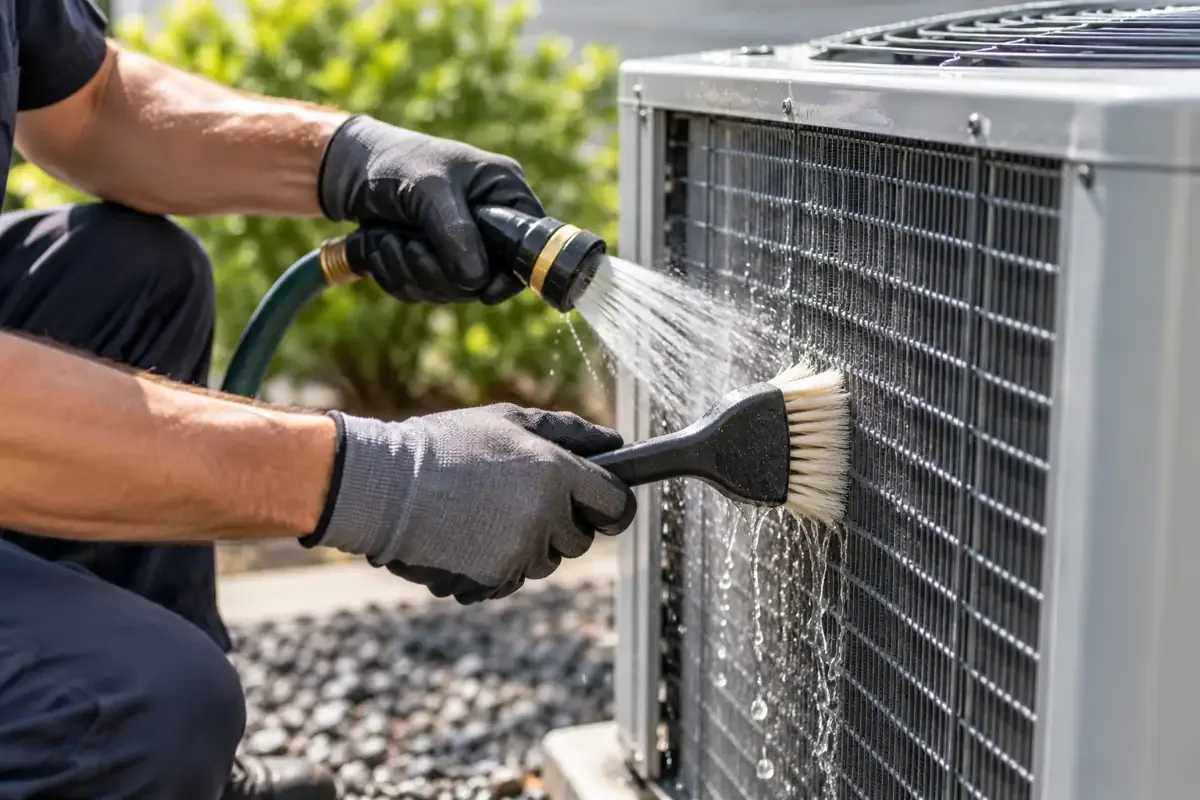
- Outdoor unit (heat pumps) — make sure it is not buried in leaves, snow or ice, and that nothing is stacked against it.
If none of this restores heat, you have done the useful homeowner part. Do not open equipment cabinets or adjust gas or electrical components — the rest belongs to a provider visit.
What happens during a no-heat visit?
The provider starts by confirming your symptom pattern, then tests the chain in order: thermostat signal reaching the equipment, power and safeties, the heat source itself (ignition and burners on a furnace, compressor and reversing valve on a heat pump, elements on electric heat), and airflow through the blower and ducts. The first failed link is usually the answer.
Expect a clear explanation of what failed and a written estimate before any work begins. Many no-heat causes — a thermostat, capacitor, ignitor or sensor — are same-visit repairs once you approve the work.
Why do thermostats and power cause so many no-heat calls?
The thermostat is the brain and the breaker panel is the lifeline; the most expensive equipment in the world does nothing without both. Thermostat batteries die silently, breakers trip during storms or when a struggling motor draws too much current, and furnace switches get knocked off by accident more often than anyone admits.
One caution about smart thermostats: they need a common wire (C-wire) for steady power in many installations. A smart thermostat that reboots, loses Wi-Fi or behaves erratically in heating season is often starving for power rather than broken. That is a quick diagnosis for a provider, not a reason to replace the thermostat on a guess.
When is repair no longer the right call?
If the no-heat cause turns out to be a worn part on an otherwise sound system, repair is the sensible path. Replacement enters the conversation when the system is old enough that major components are failing in sequence, when the heat exchanger or compressor is compromised, or when the system was poorly matched to the house from the start.
Ask the provider for both numbers — the repair cost and what a replacement would run — along with an honest read on what is likely to fail next. That comparison, not a rule of thumb, is how you decide.
Furnaces and heating in Edmonds homes
Edmonds stretches from the Puget Sound waterfront up into the hills, and that geography shapes its heating calls. Waterfront and west-side homes take the brunt of marine wind and damp air, while hillside homes deal with colder overnight lows. A large share of the housing stock is older — craftsman, Tudor and mid-century homes with real character, and often with heating equipment to match.
Older Edmonds homes sometimes have heating systems that were sized for a different era of insulation and windows. If some rooms never quite warm up while others overheat, the issue is often distribution — ductwork, airflow or an aging furnace working harder than it should — rather than the thermostat setting. A local provider can tell the difference in one visit.
No-heat questions
The thermostat is set to heat but nothing turns on. What first?
Check the thermostat display and batteries, then the breaker and the furnace power switch. Those three account for most "nothing happens" calls and take two minutes to rule out.
The fan blows but the air is cold. Is that an emergency?
It is uncomfortable, not dangerous — unless you smell gas or burning. Check the filter and thermostat, then call for a visit. Do not keep running the system for hours hoping it warms up.
Should I keep resetting the breaker if it keeps tripping?
No. Reset once. A breaker that trips again is doing its job — something is drawing too much current or shorting. Leave it off and call.
Could the problem be the thermostat itself?
Yes, thermostats fail. If the display is erratic, the system ignores setpoint changes, or a new smart thermostat never worked quite right, say so when you call — it changes what the provider tests first.
My heat pump runs constantly but the house will not warm up. Normal?
Heat pumps run longer cycles than furnaces by design, but if the house never reaches setpoint, check the filter and the outdoor unit for ice or debris first. If it still cannot keep up, the system needs a visit — possibly low refrigerant or a failing component.
Do you service Edmonds?
Yes — calls are connected with independent local HVAC providers serving Edmonds and nearby communities. Availability depends on the provider and the time of year, so ask when you call.